
From Combined Maritime Forces Public Affairs
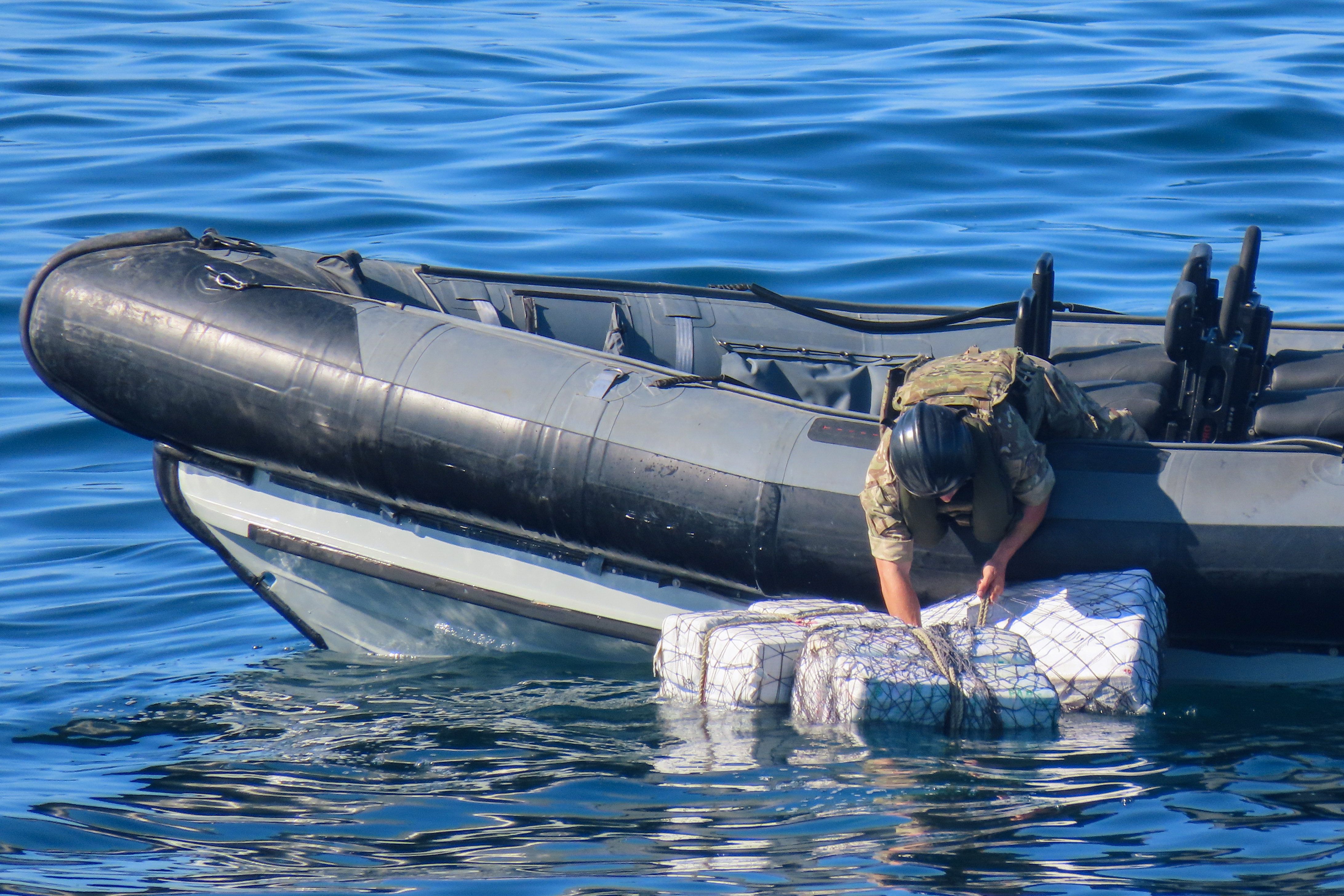
MANAMA, Bahrain — The Royal Navy’s HMS Lancaster (F229), working in direct support of New Zealand-led Combined Task Force (CTF) 150 of Combined Maritime Forces, seized 319 kg of heroin and 83 kg of methamphetamine from a vessel in the Arabian Sea, March 8.
The interdiction by the Duke-class Type 23 frigate represents CTF 150’s second drug seizure since New Zealand assumed command Jan. 15.
The Frigate’s un-crewed air systems identified suspicious activity, triggering Lancaster to launch their Wildcat helicopter. The aircrew confirmed the activity, signaling the Lancaster search team to board the suspicious vessel. After weighing and documenting the haul, the crew properly disposed of the narcotics.
Royal Navy Cmdr. Sam Stephens, commanding officer of HMS Lancaster, said he’s proud of the team effort that went into making this interdiction.
“I am really pleased that Lancaster has been able to demonstrate the utility of a tailored air group consisting of the Wildcat helicopter and recently procured un-crewed Peregrine air systems in a combined 24-hour deck cycle to achieve persistent surveillance and beat illicit drug runners in the region,” Stephens said.
New Zealand Cmde. Rodger Ward, commander of CTF 150, said he’s proud to be working with partners on shared goals.

“It’s pleasing to have another drug bust under our belt. The interdiction shows the utility of the Combined Maritime Forces construct… working together for collective maritime security. It is great that we can share this success with our Commonwealth partners from the UK,” he said.
CTF 150 is one of five task forces under Combined Maritime Forces, the world’s largest international naval partnership. CTF 150’s mission is to deter and disrupt the ability of non-state actors to move weapons, drugs and other illicit substances in the Indian Ocean, the Arabian Sea and the Gulf of Oman.
Combined Maritime Forces is a 46-nation naval partnership upholding the international rules-based order by promoting security and stability across 3.2 million square miles of water encompassing some of the world’s most important shipping lanes.
 Combined Maritime Forces